Perou Decouverte


Perou Decouverte
In the heart of the Lambayeque region, just 35 km from Chiclayo, lies one of the most fascinating treasures of northern Peru: the Bosque de Pómac. This historical sanctuary, a true open-air museum, offers an experience where millennial archaeology and exceptional biodiversity harmoniously blend.
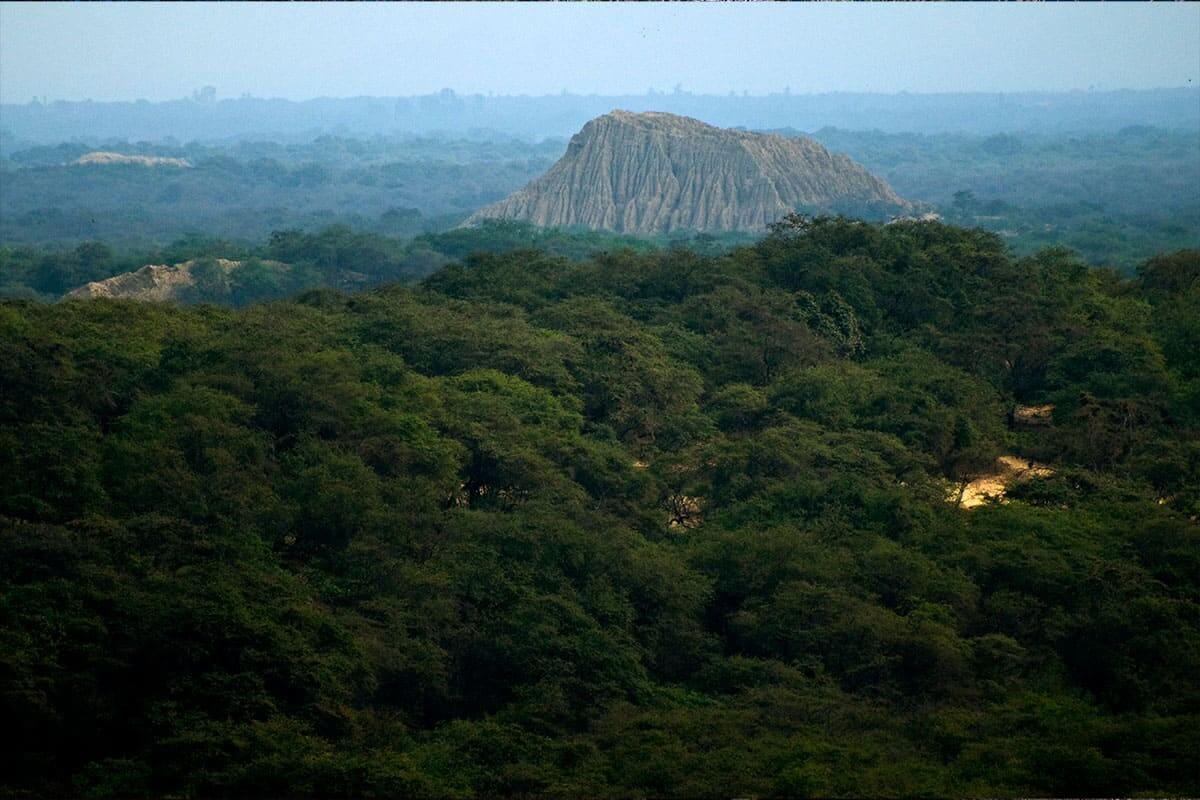
Imagine a landscape where 20 adobe pyramids from the Sicán (Lambayeque) culture emerge from a 1,000-year-old equatorial dry forest. Here, each algarrobo tree tells a story, each pyramid reveals a secret, and each bird sings a pre-Columbian legend.
Classified as a Historical Sanctuary since 2001, this 5,887-hectare site is much more than just a tourist attraction: it's a living testament to the ingenuity of ancient Peruvian civilizations and their symbiotic relationship with their environment.
The Bosque de Pómac houses one of the most important archaeological complexes on the northern Peruvian coast: Batán Grande, the heart of the Sicán (Lambayeque) culture that flourished between 850 and 1100 AD.
Considered the largest gold and silver production center of pre-Hispanic Peru, it's estimated that 90% of gold objects in Peruvian collections come from this region. It wasn't a city in the traditional sense, but a major ceremonial, administrative, and economic center where mainly the religious and political elite resided.
The first scientific research was conducted by Japanese archaeologist Izumi Shimada starting in 1978. His discoveries revolutionized our understanding of the region:
The site has about twenty truncated pyramids (huacas) made of adobe, some reaching over 30 meters in height. The construction technique, called "Chamber and Fill", also used algarrobo wood as an innovative structural element.
Between 1050 and 1100 AD, the main constructions of Batán Grande were deliberately burned. Archaeologists attribute this decline to:
• 1979: Beginning of systematic scientific excavations by Izumi Shimada
• 1984: Classified as Intangible Reserve Zone (DS 39-84-ED)
• 2001: Creation of the Historical Sanctuary (DS 034-2001-AG)
• 2009: Declared Cultural Heritage of the Nation (RDN N.º 057/INC)
• 2024: Level 4 in the National Inventory of Tourist Resources
Each visit to the historical sanctuary reveals unique treasures where nature and archaeology have conversed for centuries. Here are the must-see attractions of Bosque de Pómac.
This impressive adobe structure, named for its characteristic openings, is one of the central monuments of the Middle Sicán period. It features a unique U-shaped architectural complex in the region.
This venerable tree (Prosopis pallida) is a silent witness to 1000 years of history. Its unique characteristics:
🌿 Traditional Veneration of the Millennial Algarrobo: Locally called "Algarrobo del Calvario" for the natural crosses in its branches, this tree is the object of popular devotion. A small chapel is dedicated to it, where visitors leave offerings and prayers.
Approximately 8 km from the Interpretation Center, this panoramic viewpoint offers a spectacular view of:
The Bosque de Pómac protects one of the last dense algarrobo groves on the Pacific coast, an ecosystem classified as Tropical Pacific Desert recognized as UNESCO World Heritage.
Dominant species forming 4 types of vegetation formations at Bosque de Pómac:
🌳 Other Important Plant Species of Bosque de Pómac:
With 107 recorded bird species including 22 endemic ones, Bosque de Pómac is a world-class destination for ornithological observation.
Following the police intervention on January 20, 2009 that cost two police officers their lives, an extensive restoration program of Bosque de Pómac has achieved:
🌱 Sustainable Forest Products of Bosque de Pómac: The local community sustainably exploits algarrobo to produce algarrobina (nutritive syrup), renowned algarrobo honey, and traditional handicrafts.
To fully enjoy your visit to Bosque de Pómac, here are all the essential information gathered in one practical guide.
The historical sanctuary is located just 35-41 km from Chiclayo, which represents about 45 minutes by road. Two main routes are possible:
The historical sanctuary is open to the public:
The fees contribute to the conservation of the site:
Free access is available (Local residents) on the following dates:
*Local residents: Requires presentation of identity card (DNI) to benefit from preferential rate.
💡 Practical tip: Bring cash in small denominations. Credit cards are generally not accepted at the entrance of Bosque de Pómac.
To optimize your time in the region, we recommend this full-day circuit:
Morning (8am-12pm): Visit the National Sicán Museum in Ferreñafe to understand Sicán culture and see the original treasures.
Midday (12pm-1pm): Typical lunch in Ferreñafe or Chiclayo.
Afternoon (1:30pm-5pm): Exploration of Bosque de Pómac (Huaca Las Ventanas, Millennial Algarrobo, viewpoint).
Extension option: Combine with Sipán (royal tomb) or Túcume (valley of pyramids) over 2 days.
💚 A responsible visit contributes to the conservation of our protected spaces!
We strongly recommend taking a certified local guide to visit Bosque de Pómac:
The Historical Sanctuary Bosque de Pómac represents much more than just a tourist attraction near Chiclayo. It's a unique immersive experience where millennial history and exceptional biodiversity meet.
Unlike Sipán (royal tomb) or Túcume (valley of pyramids), Bosque de Pómac offers a complete archaeology + nature experience:
You now have all the information to visit this unique historical sanctuary. Share this article with other travelers or consult our other guides to prepare your trip to Peru.