Perou Decouverte


Perou Decouverte

Opening Year: 2006
Cuisine Type: Peruvian
Specialty: Pachamanca
Capacity: 70 people (indoor)
Address: Comandante Ladislao Espinar 240, San Miguel
Reservations Phone: 566 3875
WhatsApp: 971 107 583
Languages Spoken: Spanish, English, French
Hours:
• Tuesday to Friday: 12:00 PM to 3:00 PM
• Weekend: 11:30 AM to 5:00 PM
Services:
• À la carte menu
• Parking
• Takeout
• Handicapped access
• Pet friendly
• Local products
Social Media:
• 📸 Instagram & 🎶 TikTok: @pachamancas.lcr
• 📘 Facebook: La Casita de Ricardo

Located in San Miguel, Lima, La Casita de Ricardo pays tribute to Andean culture and the culinary traditions of the Peruvian highlands. Its welcoming atmosphere, inspired by a small house in the Andes, invites visitors to step away from the pace of the capital for a moment and discover food deeply connected to the land and the joy of sharing a meal. Its speciality, Pachamanca, is much more than a dish: it represents an ancestral tradition of gratitude to Mother Earth. In this interview, the people behind the restaurant tell us about its story, ingredients, traditions and the experience they hope to share with every visitor.
This interview has been expanded to explore La Casita de Ricardo’s story, Andean identity, culinary specialities and the traditions that inspire its cooking.
Why did you choose the name “La Casita de Ricardo”? What is the story behind the name and the project?
The name grew out of the very essence of the restaurant. The structure resembles a little house, and we decided to pair it with the name Ricardo, its founder, to convey a sense of warmth and familiarity.
We want customers to feel that, when they walk through our doors, they briefly leave behind the pace of Lima and step into a relative’s home in a village in the Peruvian highlands. It is a place where they can forget their everyday worries, enjoy traditional food and feel at home. That is the spirit behind La Casita de Ricardo.
Why did you choose San Miguel, Lima, as the setting for this Andean world? Is there a particular connection between the district and your project?
When the project began, we saw an opportunity to introduce Andean cuisine to people living in Lima Moderna, where this kind of food offering was not widely available. We wanted people to discover and enjoy traditional dishes such as Pachamanca without having to travel all the way to the Andes.
We chose San Miguel as the place to develop this idea and share our culture with a diverse audience. From the beginning, our goal has been to bring Peru’s culinary traditions to more people and show that Andean gastronomy has a special place in the city.
The restaurant is described as “a vibrant tribute to Andean culture”. How does this philosophy take shape in your décor, service and cooking?
Every corner of La Casita de Ricardo tells part of our story. Our décor brings together objects and keepsakes from the trips Ricardo and his family have made over the years to different regions of the Peruvian highlands. Each item reflects, in its own way, our country’s cultural diversity and richness.
This philosophy is also reflected in our service, which aims to be warm, personal and family-oriented, and in our cooking, where we try to preserve traditional techniques, ingredients and preparations. We want customers to do more than simply come for a meal: we hope they enjoy an experience that brings them closer to Andean culture and makes them feel part of it.
What unique experience do you offer your customers?
The experience we offer comes from the atmosphere and décor of our restaurant. Being here feels like being in another part of Peru, especially in the heart of the Andean highlands.
What are your signature dishes or products?
Our signature dishes are chicken and pork Pachamanca and Patasca. The word Pachamanca comes from the Quechua words pacha (earth) and manca (pot). It literally means “earth pot” or “pot in the ground”. It is a communal ritual dish, a way of giving thanks to Pachamama (Mother Earth) for the food she provides.
Pachamanca is much more than a dish: it is a ritual. Could you explain how it is traditionally prepared and why it is so important in Andean culture?
Pachamanca is an ancestral tradition of the Peruvian Andes that expresses gratitude to Pachamama, our Mother Earth, for the food she provides. Historically, its preparation has been associated with harvests, celebrations and times of abundance, making it an expression of gratitude and community togetherness.
At La Casita de Ricardo, we aim to preserve this tradition while adapting it to city life. We therefore retain essential elements of the preparation and use a special stone oven that brings us closer to the spirit of traditional cooking. For us, preparing Pachamanca means keeping an important part of our cultural identity alive.
What are you most proud of?
Our Pachamanca is undoubtedly what we are most proud of. It is prepared by hand every day using fresh, high-quality ingredients.
Pachamanca is often associated with sharing and celebration. For what special occasions do you prepare it for your customers?
Pachamanca is, above all, a dish made for sharing. Many families and groups of friends visit our restaurant to celebrate birthdays, get together after a long time apart or enjoy a special occasion. It is also a way to celebrate our country’s festivals and traditions.
We love seeing customers gather around the same table, share food and create memories together. Pachamanca is not just a meal: it is an experience that brings people together and strengthens family bonds.
Which Andean herbs do you use, and how do you select them? Do they have particular properties or cultural significance?
In our kitchen, we use traditional Andean herbs such as chincho, muña and marmaquilla, which give our dishes distinctive aromas and flavours. They are essential ingredients in our seasonings and are part of a culinary tradition passed down through generations.
Beyond their culinary value, some of these herbs are traditionally used in infusions and digestive preparations. Including them in our cooking is a way to preserve the authentic flavours of the Andes and share the richness of these ingredients with every visitor.
Where do your ingredients come from? Do you work with local producers?
All our products come from local producers or are brought directly from Peru’s inland regions, helping us maintain the freshness and quality of our dishes. We also use less common Andean herbs, which we process by hand to preserve their aromas and essential qualities.
You work with local suppliers and products from different parts of Peru. Could you tell us about some of these producers and the relationships you have built with them?
We work with a range of local suppliers, as well as others who bring us products from different regions of Peru. Building relationships of trust with them is essential because ingredient quality is a key part of the experience we offer.
We especially value the work of those who select and supply these products. Behind every ingredient there is knowledge, dedication and a tradition that deserves recognition. Maintaining these relationships helps us continue serving dishes that preserve the essence of our cooking.
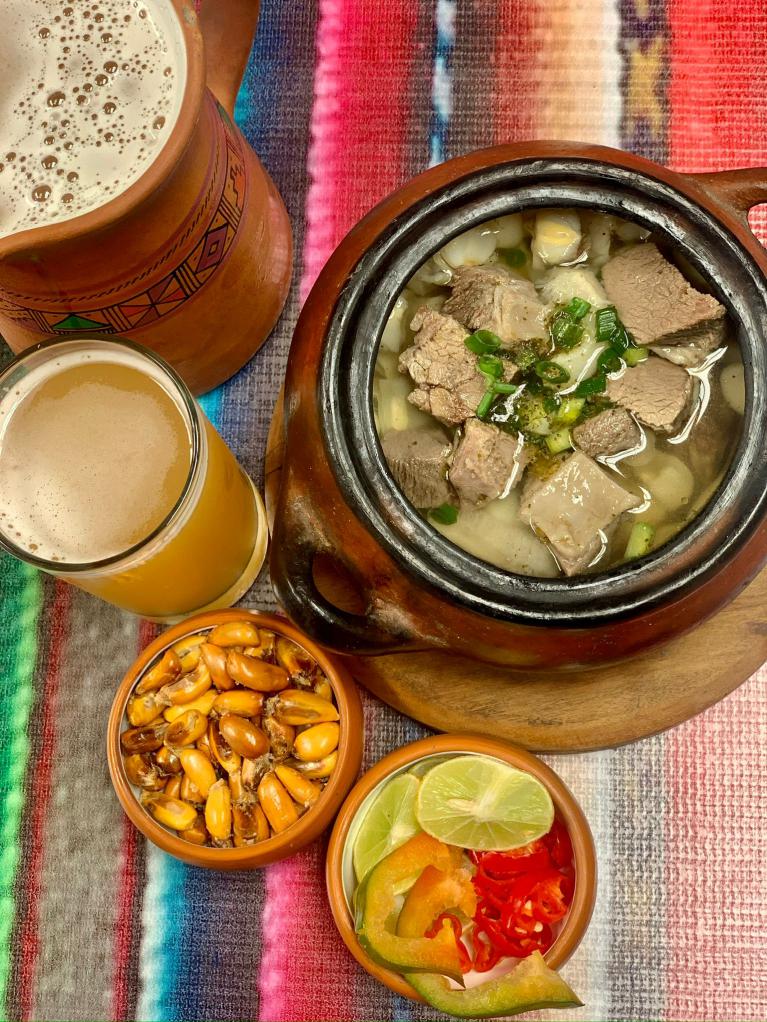
Patasca is a traditional dish that many travellers may not know. Could you tell us about its origins and how it is prepared?
Patasca is a traditional soup from the Peruvian Andes, made mainly with mote corn and, depending on the region and recipe, different meats and aromatic herbs. It is a hearty dish, deeply rooted in traditional Andean cooking and the custom of sharing comforting meals.
It takes time and patience to prepare, as the corn must cook until it reaches the right texture and gives body to the broth. It is an excellent way to discover another side of our gastronomy: a cuisine that makes use of the land’s ingredients and turns simple preparations into dishes full of history and flavour.
Which dishes or products would you especially recommend to someone trying Andean cuisine for the first time?
Without a doubt, we recommend our two-meat Pachamanca. It is a generous dish, ideal for sharing, bringing together different flavours and ingredients representative of Andean tradition around one table.
But Pachamanca is much more than a combination of ingredients: it represents coming together, sharing and celebrating. We like to think that through this dish, visitors can discover part of Peruvian culture and understand why food plays such an important role in family gatherings.
What advice would you give a tourist trying Peruvian food for the first time?
We encourage visitors to explore the full range of Peruvian cuisine. Most of our dishes are prepared daily with local ingredients which, according to our suppliers, may have less exposure to chemicals or hormones than some products from other markets.
Do customers need to make a reservation?
We do not take reservations. We recommend visiting between 11:30 a.m. and 1:30 p.m. to avoid peak hours.
How can people keep up with your latest news?
You can follow us on Instagram and TikTok under the username @pachamancas.lcr.
What are your plans for the coming years? Do you have new ideas or challenges in mind?
We are keen to keep growing and explore new opportunities to expand within Lima. We want more people to discover our food offering and the richness of Andean cuisine.
At the same time, our challenge is to grow without losing what makes us special: authentic flavours, respect for our traditions and the warm, personal service that defines La Casita de Ricardo. We hope to share news about our upcoming projects very soon.
If a traveller could remember just one thing about their visit to La Casita de Ricardo, what would you want it to be?
We would like them to remember two things: the warmth of our welcome and the authentic flavours of the Peruvian highlands. We want them to leave feeling that they have been welcomed into a family home, with the memory of a meal that introduced them to part of our culture.
If they leave satisfied, smiling and wanting to return, we will have achieved our purpose.
What message would you like to share with travellers discovering Lima who are looking for an authentic food experience?
We invite them to discover a side of Lima that also tastes of Andean tradition. At La Casita de Ricardo, they will find much more than typical dishes: they will find flavours that tell stories, ingredients that reflect our country’s diversity and an experience designed to be shared.
We want them to feel at home, discover Pachamanca and other flavours of the highlands, and take a little piece of Peru with them in their hearts. We look forward to welcoming you to La Casita de Ricardo!
💬 Our heartfelt thanks to La Casita de Ricardo for sharing its story, traditions and passion for Andean gastronomy with us. Through Pachamanca, Patasca, traditional herbs and an atmosphere inspired by highland villages, this restaurant offers much more than a meal: it provides an opportunity to get closer to Peruvian culture without leaving Lima. For travellers wishing to discover the flavours, customs and spirit of the Andes, La Casita de Ricardo is an invitation to sit at the table, share food and enjoy a living tradition.


Find reviews from La Casita de Ricardo's customers here soon. If you have already enjoyed their delicious Pachamanca, feel free to leave a comment!
